What We See When You Move
Most people walking into a Pilates studio are thinking about their back, their hips, or whether they wore the right socks. But underneath every session, something very specific is happening that rarely gets explained.
Your body has a favorite side. It has had one your whole life. And it has been quietly letting that side run the show in almost every movement you make.
You have probably never noticed, because it has always felt completely normal.
Normal and balanced, it turns out, are two very different things.
What that means is this. When you move, one side is usually doing more of the work. One side stabilizing, pushing, or controlling, while the other side quietly assists.
Your body has gotten very good at making that feel completely normal.
As educators, we look for this first. Not just what you are doing, but how your body is organizing itself to do it.
And what we see is almost always the same story. One side working hard, one side along for the ride, and a body that has adapted so well you barely notice it.
Behind all of it is something surprisingly simple. Sometimes we work both sides of your body together, and sometimes we do not. That choice is what helps us find the imbalances, understand what your body actually needs, and start building something that feels genuinely even.
Your Body Is Brilliant. Also, It Is Cheating.
Here is the thing about your body. It is incredibly smart. Its entire job is to get the movement done, and it will do whatever it takes to make that happen.
If one side is stronger, more mobile, or more coordinated, that side steps up. Every time. Without asking. The other side is grateful for the break and takes it without complaint.
Over time, that becomes a pattern. You shift into one hip without thinking. You reach more easily in one direction. You step off a long walk, and one side feels fine while the other has opinions about it.
Nothing feels dramatically wrong at first. But the gap between your two sides quietly grows, and eventually it shows up as the tightness that never quite goes away, the side that always feels a little less stable, the movement that looks fine but never feels quite even.
This is your body telling you something. We, the educators, happen to speak that language.
Bilateral Movement: Where Your Body Learns the Rules
When both sides of your body work together, you have a wider, more stable base, and your whole system can focus on learning the movement. This is where we usually begin. You get to find your alignment, build strength, and develop a real sense of control without also having to manage your balance at the same time.
It feels good. And here is the part nobody tells you.
While you are busy feeling good about that movement, your dominant side is quietly doing a little more than its share. The movement still flows. It might even feel strong. But underneath, the work is not being divided equally, and your body is perfectly happy to keep it that way.
This is why some things can feel solid in a session and still leave you feeling uneven by the end of the week. Bilateral movement is essential. It builds your foundation and teaches your body how to work as a whole. It is just not the whole story.
Unilateral Movement: Nowhere to Hide
This is where things get interesting.
When we take one side away, your body cannot run its usual playbook. The base of support gets smaller. The core has to work in a completely different way. And suddenly the gap between your two sides is impossible to ignore.
One side feels steady and capable. Like it has been doing this for years, because it has.
The other side feels uncertain. A little wobbly. Like it just showed up to a test it did not know was happening.
That is not a problem. That is the whole point. When each side has to work completely on its own, compensation becomes impossible. There is no stronger side than quietly picking up the slack. Every muscle has to contribute, every side has to show up, and the body starts to find a more honest kind of balance.
Over time, this is how the unevenness actually changes. Not by pushing harder but by making both sides equally capable of doing the work.
There is one more thing happening here that most people never expect.
When one side of your body is working, the other side is still changing. Even though it is not moving at all.
You might notice it after a session. One side worked harder, but both sides feel more connected. More even. A little more capable than they were before.
This is called cross-education. Your brain does not fully separate the left side from the right. When you train one limb, it sends a version of that same signal across to the other side.
The result is a real strength benefit to the side that did not move. A small upgrade it did not quite earn, but still gets anyway.
This becomes especially useful when you are working around an injury. Training the healthy side is not just about keeping you active. It is quietly supporting the injured side through the way your brain is wired.
And how you move matters.
The effect is strongest when you move slowly and with control. Resisting the spring instead of letting it snap back. Lowering with intention instead of dropping out of the movement.
That quality is already built into how we work. Which means this is happening more often than you think.
Two Methodologies. Two Complete Systems.
By now, you have probably started to recognize parts of your own movement in this.
The side that takes over. The side that works a little harder. The side that feels just slightly behind.
This is exactly what we are working with.
At Pilates Fit Studio, our educators practice and teach two distinct and complete movement disciplines: Classical Pilates and GYROTONIC®.
These are not variations of the same thing.
And we do not blend them.
Each is taught as its own complete method, with its own apparatus, its own principles, and its own way of working with the body.
What they share is a refusal to let imbalances stay hidden.
Both put your body in situations where compensation becomes difficult, and honesty becomes unavoidable.
They just go about it in very different ways.
Pilates shows you this through structure.
GYROTONIC® shows you the same thing through movement.
Classical Pilates
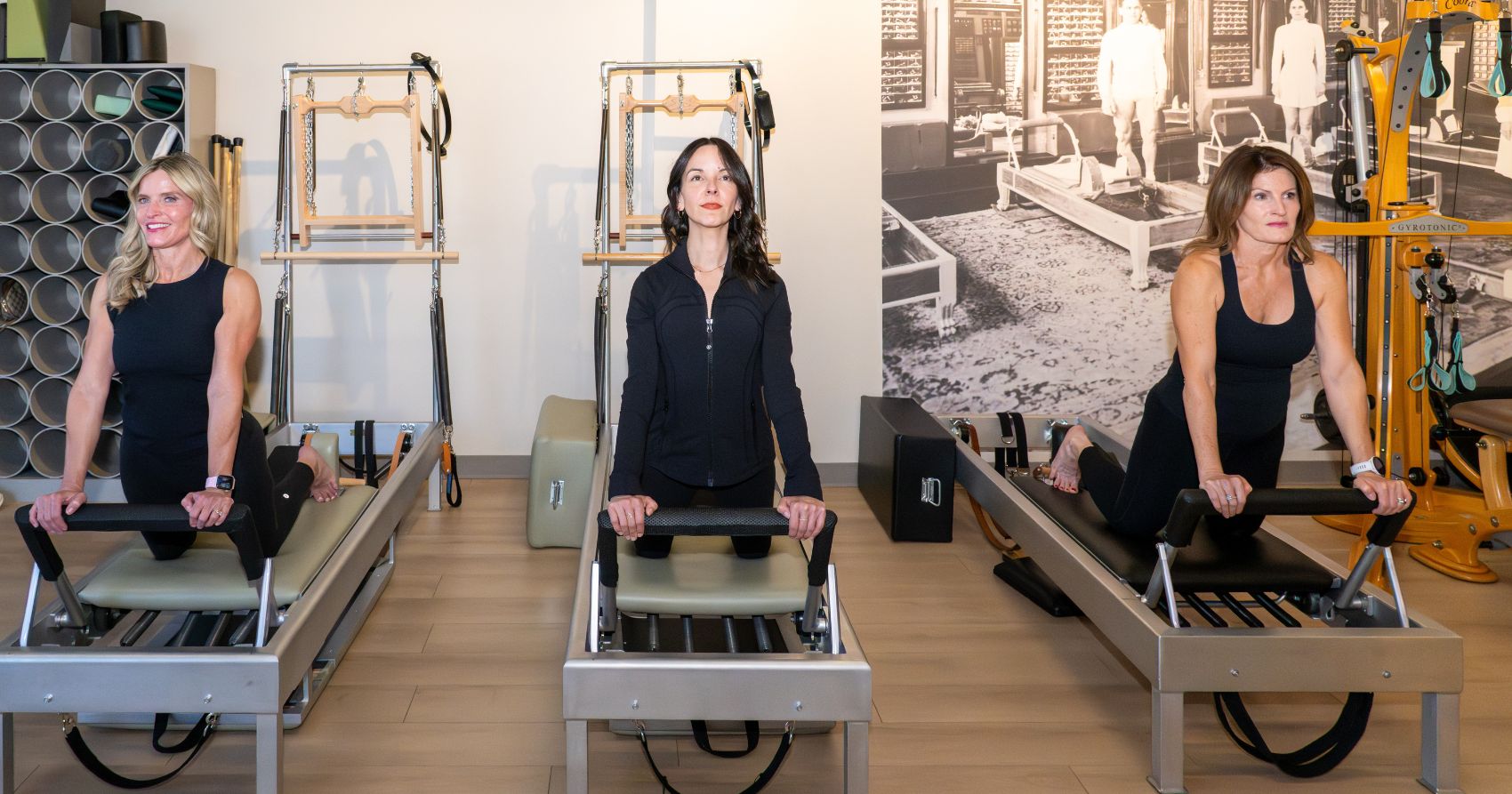
Pilates Fit Studio is fully equipped with the complete line of authentic GRATZ Pilates apparatus.
Gratz Industries is the original manufacturer of Pilates equipment, built to Joseph Pilates’ exact specifications and the gold standard for Classical Pilates training worldwide.
This is where it becomes very clear.
The equipment does not guess. It reflects exactly what your body is doing.
The Reformer
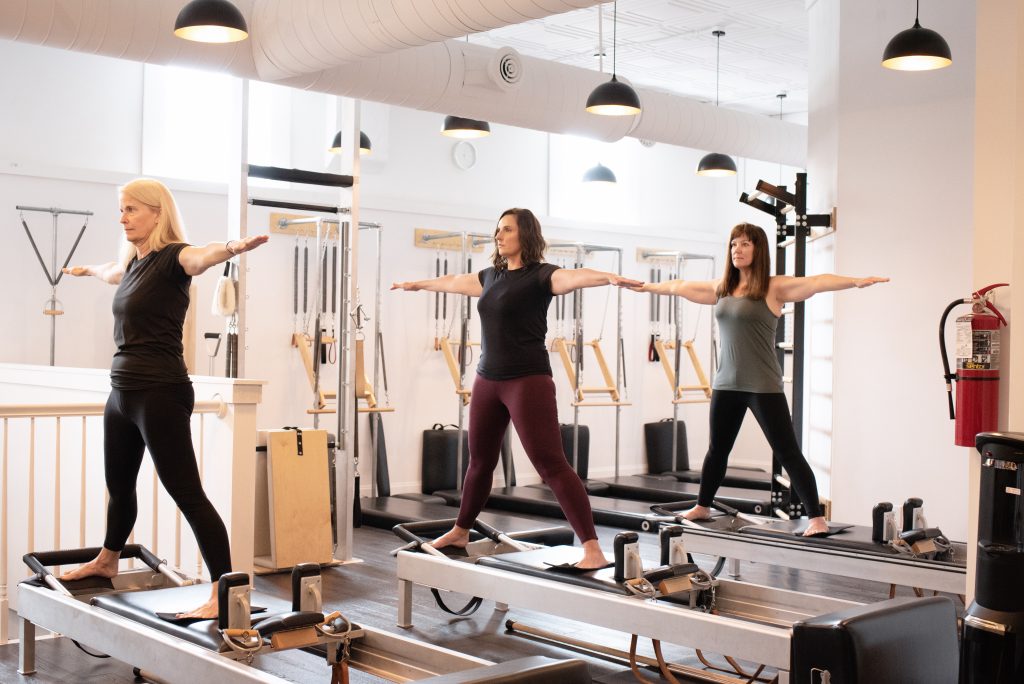
The Reformer is the heart of the Pilates method and the piece most people meet first.
Most people feel this here first.
It’s moving carriage works like a level.
If one side is doing more than its share, the carriage lets you know.
One foot pressing a little harder.
One strap feels heavier than the other.
The carriage is drifting just slightly off course.
You may have felt this before without knowing what it was trying to tell you.
Now you do.
Because each strap works independently, the stronger side cannot quietly help the weaker one.
Every imbalance comes to the surface where we can actually work with it.
The Cadillac
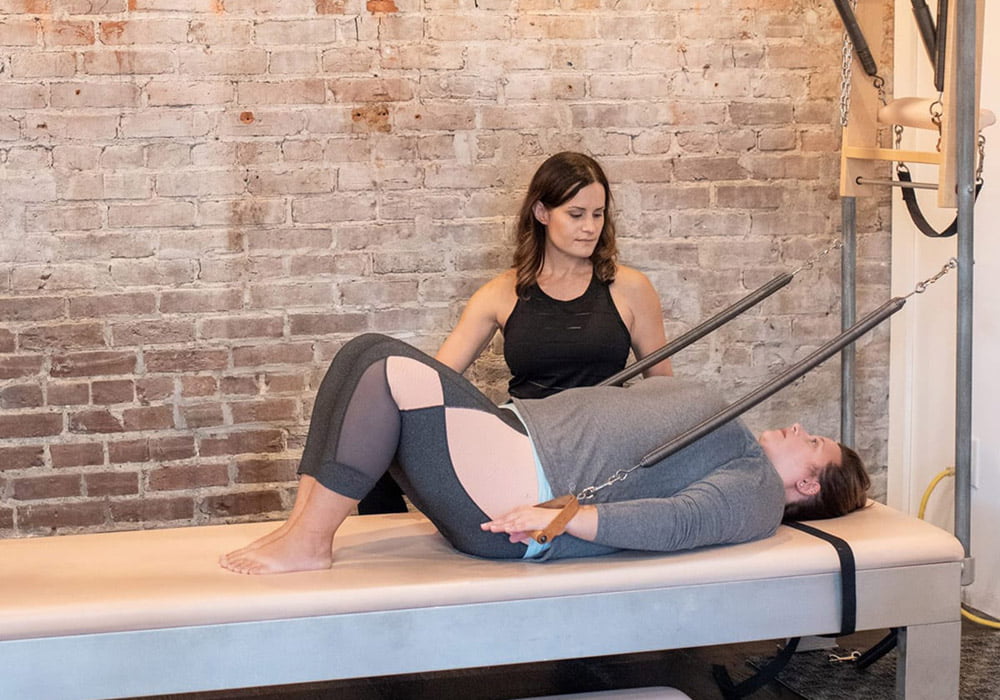
If you come in feeling crooked, the Cadillac is often where we start.
It provides a large, stable frame where each limb works against its own spring.
There is nowhere for unevenness to hide.
One side tighter than the other? That spring returns faster.
One arm weaker? It shakes where the other is steady.
The Cadillac does not rush you.
It simply shows you exactly where you are, clearly and without drama, and gives us the space to start creating room where you need it most.
The Guillotine Tower
The Guillotine Tower is one of the rarest pieces of classical apparatus still in active use anywhere in the world.
It is also, without question, the most no-nonsense piece of equipment in the studio.
A spring-loaded bar travels along fixed vertical tracks.
If one side of your body pushes or pulls with even slightly more force than the other, the bar tilts.
It catches in the track.
You feel it immediately.
You can see it.
You can sometimes hear it as the bar drags against the rail with the energy of someone clearing their throat in a very quiet room.
This is usually the moment people start to notice it.
The bar does not have a diplomatic setting.
The only way to move it cleanly is to use both sides of your body equally.
There is no adjusting.
No compensating.
No fooling it.
Your body either shows up evenly, or the apparatus very calmly informs you that it did not.
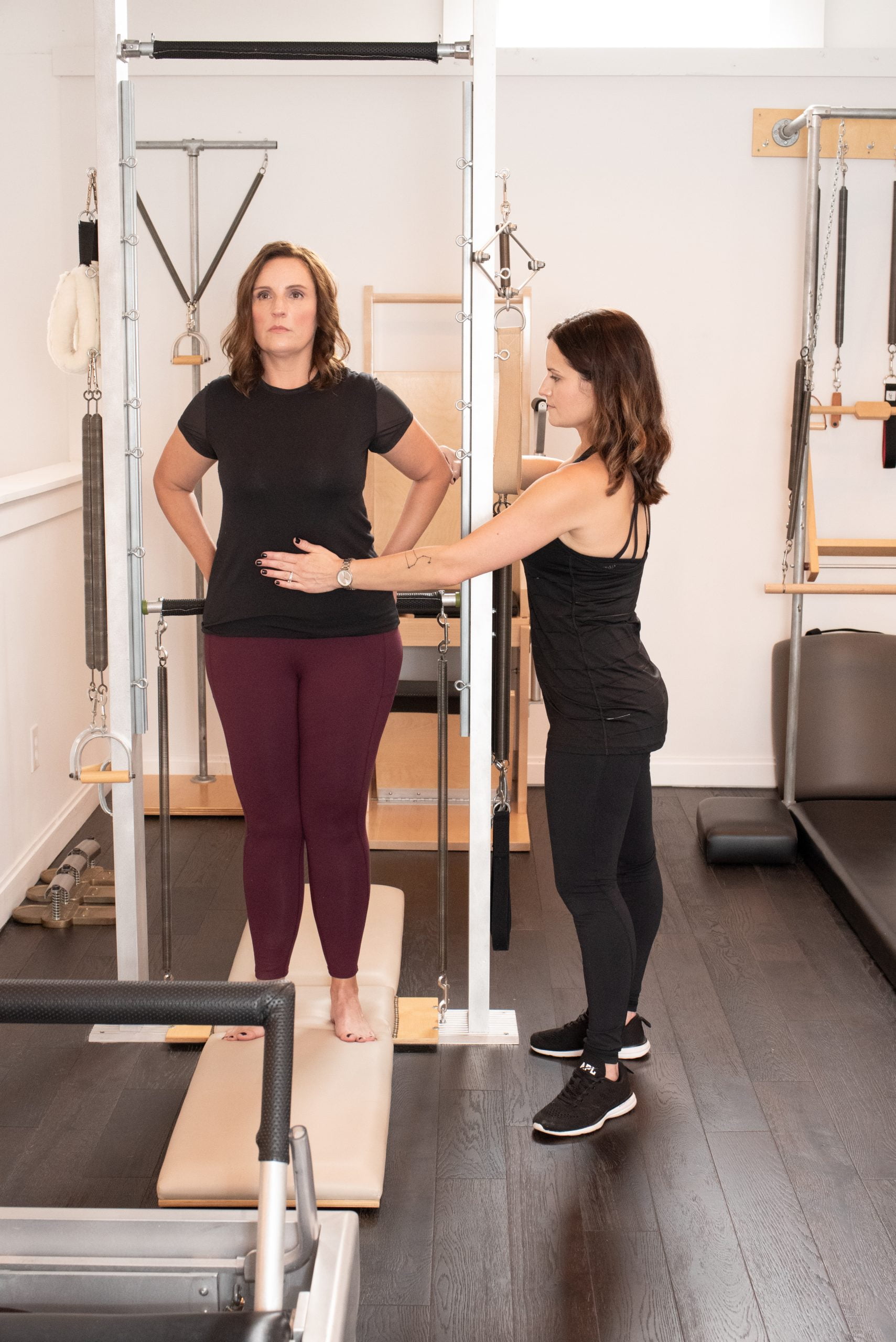
The Wunda Chair
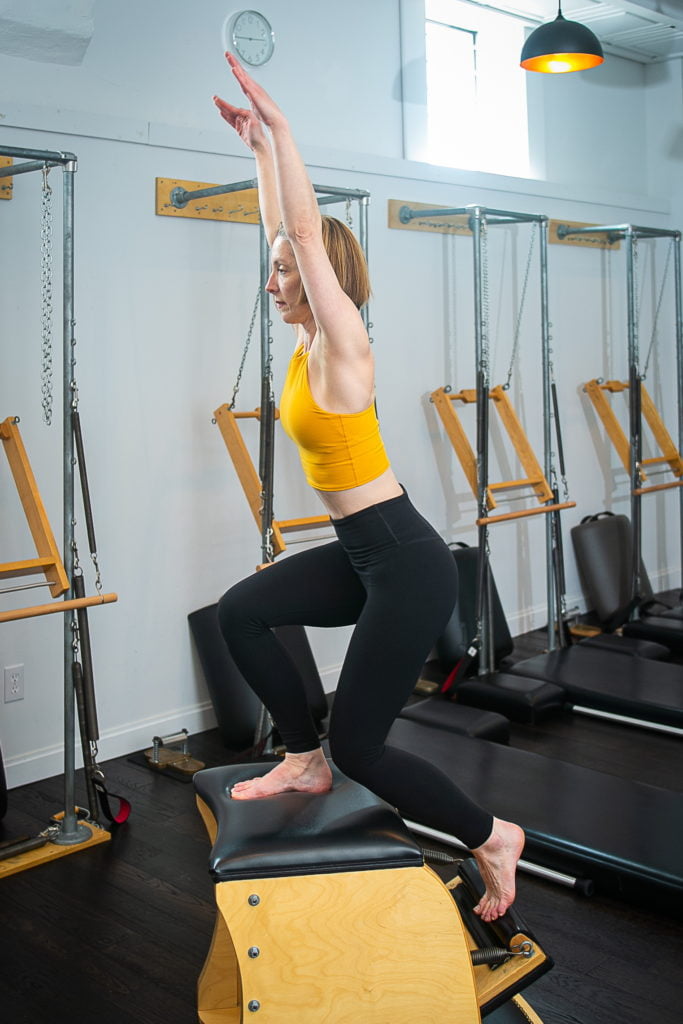
Joseph Pilates reportedly designed the Wunda Chair from a packing crate.
Whether or not that is true, it has the energy of something that was built to humble you.
Small base.
High tension.
Gravity with something to prove.
When you are upright on the Wunda Chair, your body has very little room to hide its habits.
If one hip is higher, you tip toward it.
If one glute has been quietly on vacation, you feel the absence immediately.
The side you have always trusted, and the side you have been unknowingly avoiding, becomes very clear very quickly.
It is the final question in the progression.
Can you find your balance and hold it while standing upright and moving against gravity?
The answer is always interesting.
GYROTONIC EXPANSION SYSTEM®
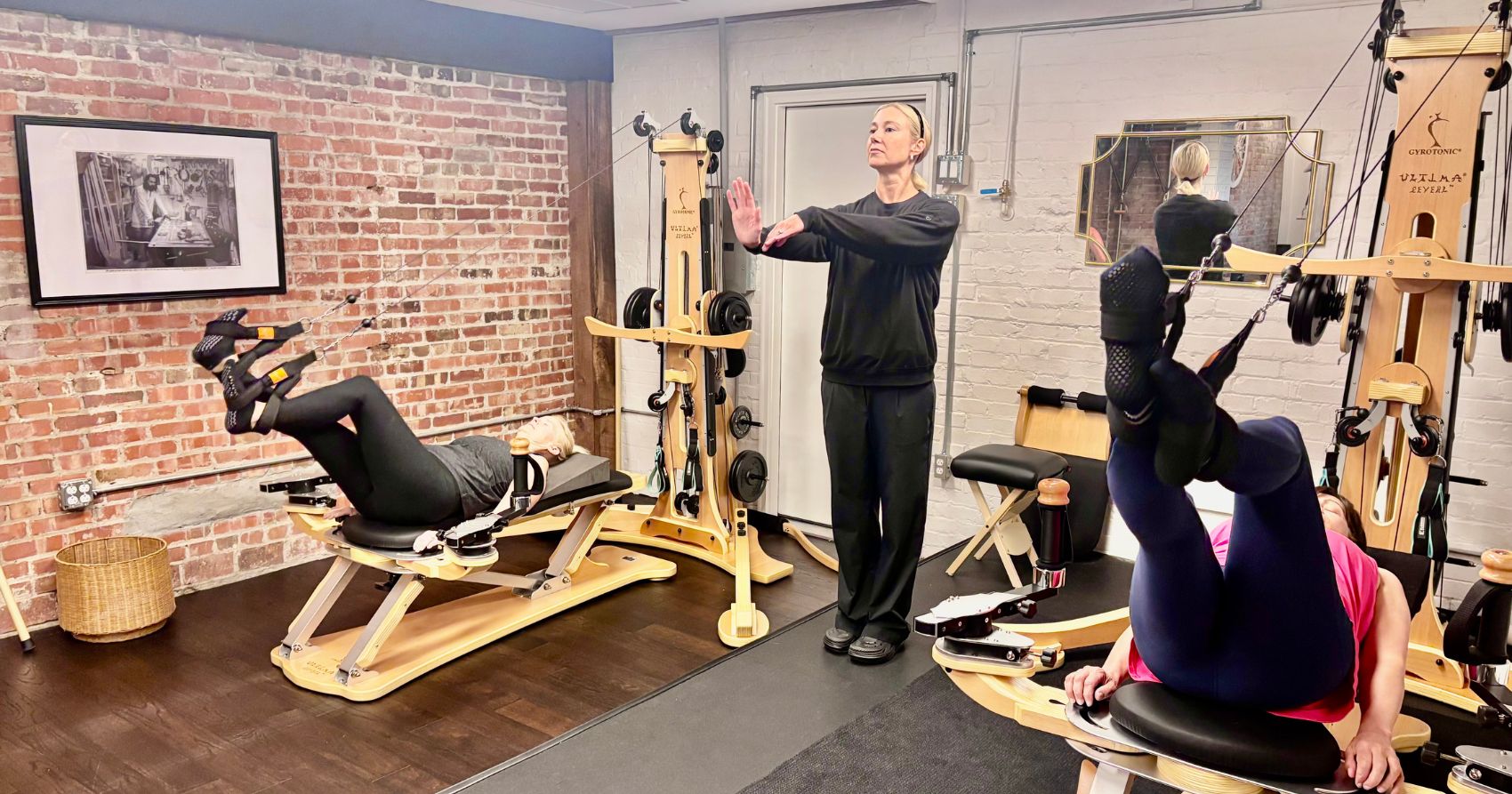
Our GYROTONIC® studios are equipped with Pulley Tower Combination Units and Leg Extension Units, allowing clients to experience the depth of the method
Where Classical Pilates uses spring resistance and structured movement, GYROTONIC® uses weighted pulleys and continuous, circular motion.
The movement is fluid.
Rhythmic.
And the body is asked to find its own center through flow rather than through a fixed path.
It is a completely different conversation with the body.
And it reveals completely different things.
The GYROTONIC® work moves through three stages.
Each side is trained on its own first, building a genuine connection to the muscles that have been underused and underloved.
Then both sides come together in bilateral movement, learning to mirror each other with real coordination.
Finally, the body learns to work across the midline, both sides moving as one unified whole.
Through it all, your center holds everything together.
If you lean or compensate, the tension in the opposite cable changes immediately, guiding you back to where you need to be.
The system is patient.
But it is paying attention.
By this point, you do not have to guess which side is doing more.
You can feel it.
What This Means for You
By now, you probably have a very good idea of which side of your body is the favorite.
That awareness is exactly where we begin.
At Pilates Fit Studio, every client starts with an assessment. Every program is built around an individual body. Every session is guided with expert observation, precise cueing, and a clear understanding of where you are going and why.
We work with beginners building their first real foundation, advanced practitioners seeking to go deeper into their practice, athletes refining how they move, and women navigating the specific demands of their bodies at every stage of life. We also work with clients managing complex conditions, including scoliosis, osteoporosis, and chronic pain.
What all clients have in common is a willingness to take the work seriously. We ask that because we hold ourselves to the same standard.
You are not placed into a class and expected to keep up. We look at how your body actually moves, where it compensates, and what it needs. Then we build from there.
Start With a Personalized Assessment
A Real Assessment. Your first session is a one-on-one assessment with a Senior or Master Instructor. We evaluate how you move in real time, identify imbalances, and understand what your body actually needs.
A Plan Built Around You. From there, we design a personalized program and guide you toward the right instructor and format. You are not guessing your way through workouts. You have a clear starting point.
Progress That Evolves With You As your body changes, your program evolves. Whether you are working privately or in a small group, each session builds on the last, so your progress is consistent and lasting.
If you are curious what we would see when you move, your first step is a one-on-one assessment with one of our Senior or Master Instructors.
Book your first session and experience the difference for yourself.